The Success Trap
Why impact founders become the bottleneck in their own business
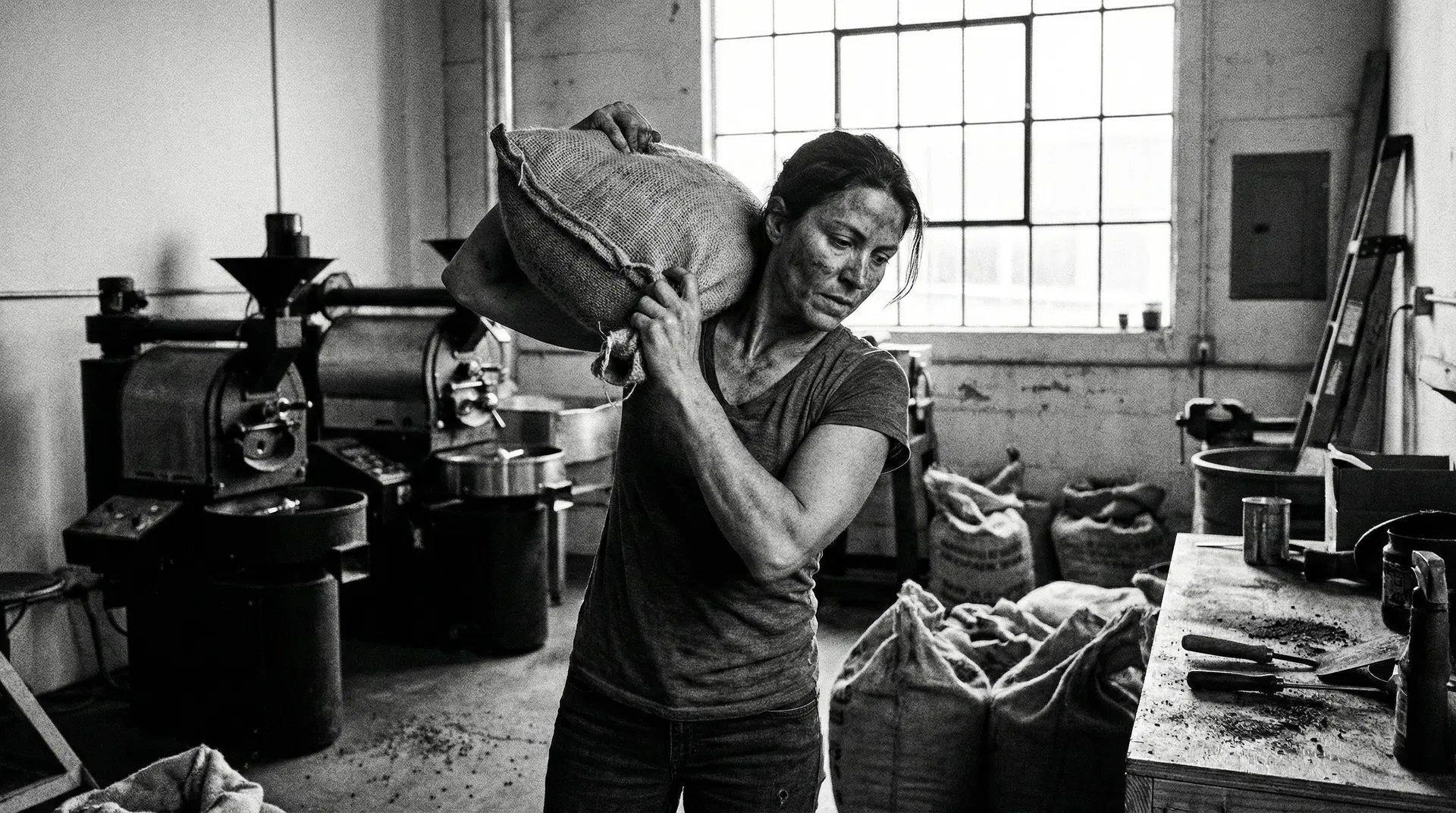
You built something that works. People are paying you. The impact is real.
So why does it feel like the business is running you, not the other way around?
This is the Success Trap. And it catches almost every impact founder I've worked with.
The Trap Explained
Here is what happens. You start with a mission. You get traction. Clients come in. You deliver. More clients come. You deliver more. The business grows — but it grows around you, not independently of you.
Every decision passes through your desk. Every client relationship depends on your personal involvement. Every piece of content, every proposal, every delivery — you.
The business is not a business. It is a very demanding job you created for yourself.
The E-Myth author Michael Gerber called this the Technician's Trap. You are so good at the work that you never build the system that does the work.
Why Impact Founders Are Especially Vulnerable
Impact founders are particularly susceptible to this trap for one reason: the mission.
When you believe deeply in what you are building — when it is not just a business but a cause — it is very hard to let go. Every decision feels important. Every client relationship feels personal. Delegating feels like diluting.
But here is the paradox: the more you hold on, the smaller the impact stays.
A business that only works when you are in it is a business that cannot scale. And a business that cannot scale cannot grow its impact.
The Dual Engine Model
The way out is what I call the Dual Engine Model. Every impact business needs two engines running simultaneously.
Engine One is the Impact Engine. This is the mission, the product, the delivery. This is what you are brilliant at. This is why you started.
Engine Two is the Commercial Engine. This is the system, the structure, the operations. This is what allows Engine One to keep running without you personally fuelling it every day.
Most impact founders pour everything into Engine One and neglect Engine Two entirely. The result is a business that burns bright and burns out.
The Evolution Path
The founder's journey has a shape. It goes like this:
Stage 1 — The Innovator. You have the idea, the expertise, the mission. You are the product.
Stage 2 — The Operator. You are delivering, growing, building. Everything goes through you.
Stage 3 — The Architect. You start building systems. You hire. You delegate. The business begins to work without you.
Stage 4 — The Strategist. You are working on the business, not in it. You are thinking about the next five years, not the next five days.
Most impact founders get stuck between Stage 2 and Stage 3. They know they need to build systems. They just never find the time, because they are too busy being the system.
The First Step Out
The first step out of the Success Trap is not hiring. It is not delegating. It is not building a team.
It is a decision.
The decision that your job is not to do the work. Your job is to build the business that does the work.
That shift — from Technician to Founder — is the hardest transition in entrepreneurship. But it is also the one that makes everything else possible.
Your impact does not need you to do everything. It needs you to build something that can do everything without you.
That is the difference between a job and a business. And it is the difference between impact that depends on you and impact that outlasts you.
More every week.
The Forlui newsletter: one impact business, broken down to its commercial core. Plus practical frameworks for founders.
Subscribe Free ↗